Occupational Therapy
Our pediatric occupational therapists support children in developing the skills needed for everyday life. Therapy focuses on fine motor skills, sensory processing, and self-care tasks, helping children build independence and confidence in their daily routines.
These development tools and interventions include:
Sensory Integration (Refinement of sensory discrimination and processing)
Training and refinement in the development of fine and gross motor skills
Regulation of arousal levels as well as attention skills
Memory development and training
Assistance in visual and auditory processing (completing language loop)
Integration of social skills along with cognitive and perceptual learning
Feeding and Swallowing skills
Proper self-care skills such as: Toilet use, bathing, dressing and grooming
Reinforce skills in play, school and everyday tasks
Adaptation and skills necessary to carry out such tasks
The expectations for the level of development of any of these skills will vary depending on the child's age, including delays and disabilities. It is critical to remember that all of these skills are developing simultaneously. Impairment of one area is likely to stunt development in other areas.
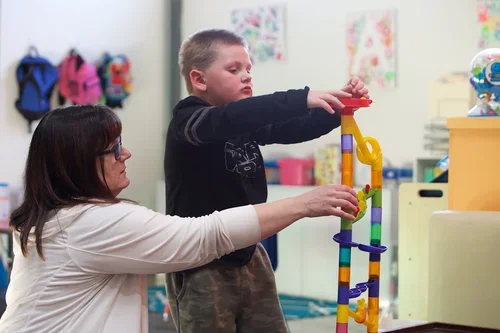
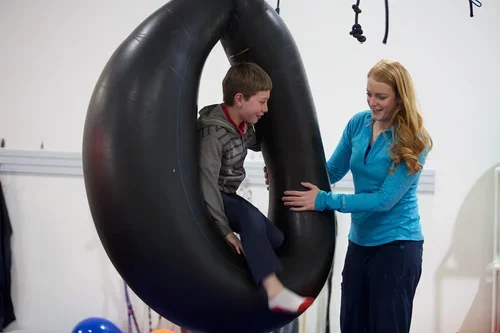
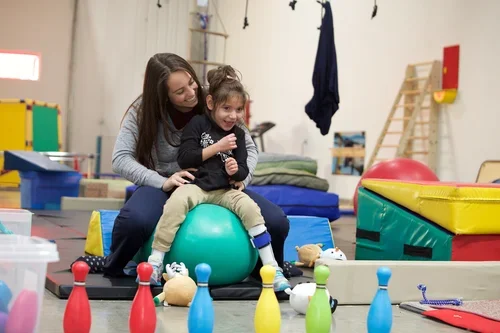
Play is the media most often used in APT's pediatric occupational therapist's treatment of children. It is highly motivating and a natural media used by all children. APT provides a stimulating environment, reinforcing big motor and sensory skills found in our vestibular equipment such as swings, balls, slides and other toys to increase and support skills. Education and involvement of the family is a primary consideration and critical to success.
Our occupational therapists support and assist in the treatment of a variety of pediatric delays and disabilities such as:
Cerebral palsy
Down syndrome
FAS (Fetal Alcohol Syndrome) and Drug Exposed infants
FG Syndrome
Fragile X Syndrome
Neurological Disorders
Childhood Strokes
Amputee's
Sports Injuries and Difficulties
Premature Infants and Children
Visually impaired (walking, balance and posture)
Autism (evaluated assessment)
The occupational therapist will perform an initial evaluation to determine each child's specific needs, and abilities to create individualized, goal-oriented sessions.
Sensory Integration - This is the foundation upon which all other skills are built.
Return to the developmental hierarchy of large to small, gross to fine
Appropriate arousal level - better learning arousal may be too high or too low
Exploration of space = Better motor planning = Greater skill level
Vestibular functioning that is more normal - improved auditory functions and completes communication loop
Sustained grasp to hold onto equipment, weight bearing on hands
Better fine motor skills = Better self-care and academic skills